Faire's audience isn't end consumers — it's independent retail buyers deciding whether to stock a product in their store, which changes what a listing photo needs to communicate. Here's what makes Faire wholesale photography different from Amazon or Etsy imagery.
Faire connects independent brands with independent retailers, and that B2B structure changes the job a product photo needs to do. A consumer browsing Amazon is deciding whether to buy one unit for themselves. A retail buyer browsing Faire is deciding whether to commit shelf space, inventory budget, and their own store's brand identity to carrying a product across a minimum order quantity — a fundamentally more consequential decision that photography needs to support differently than consumer-facing marketplace imagery. This guide covers Faire's technical image requirements and the retailer-facing photography considerations that don't apply on consumer platforms.
Main Image Requirements on Faire
- Clean, professional background — white or neutral is standard, similar to consumer marketplace expectations, though Faire's review is generally less strict on exact whiteness than Amazon's main-image enforcement.
- Square aspect ratio recommended for consistent display across Faire's catalog grid and search results.
- High resolution — Faire's zoom function on product pages benefits from source images significantly larger than the minimum display size, similar to other zoom-enabled marketplaces.
- Accurate color representation is especially important since retail buyers often order based primarily on photos without physical samples, making color mismatch a direct source of buyer complaints and reduced reorder rates.
Photographing for a Retail Buyer, Not an End Consumer
A retail buyer evaluating a product on Faire is asking a different question than a consumer: not just "would I want this" but "will this sell in my store, and does it fit my store's aesthetic and price point." This shifts what photography needs to communicate — retail buyers respond strongly to images that show how a product might look merchandised (grouped with complementary items, styled the way it might appear on a retail shelf) in addition to clean individual product shots. A pure white packshot answers "what is this item" but doesn't help a buyer picture it in their own retail context the way a thoughtfully styled secondary image can.
Packaging and Unit-of-Sale Clarity
Wholesale listings need to be unambiguous about exactly what a retailer receives per unit ordered — a single item, a set, a case pack — since this directly affects a retailer's margin calculation and shelf-space planning. Photograph the actual unit of sale clearly, including any included packaging that will ship to the retailer's store (retail-ready packaging, tags, inserts), since retailers are evaluating not just the product but the entire unboxing and shelf-display experience their own customers will have. A product that looks great alone but has generic, damaged-in-transit-prone, or poorly designed packaging can lose a wholesale order even when the product photography itself is strong.
MOQ and Case-Pack Context Images
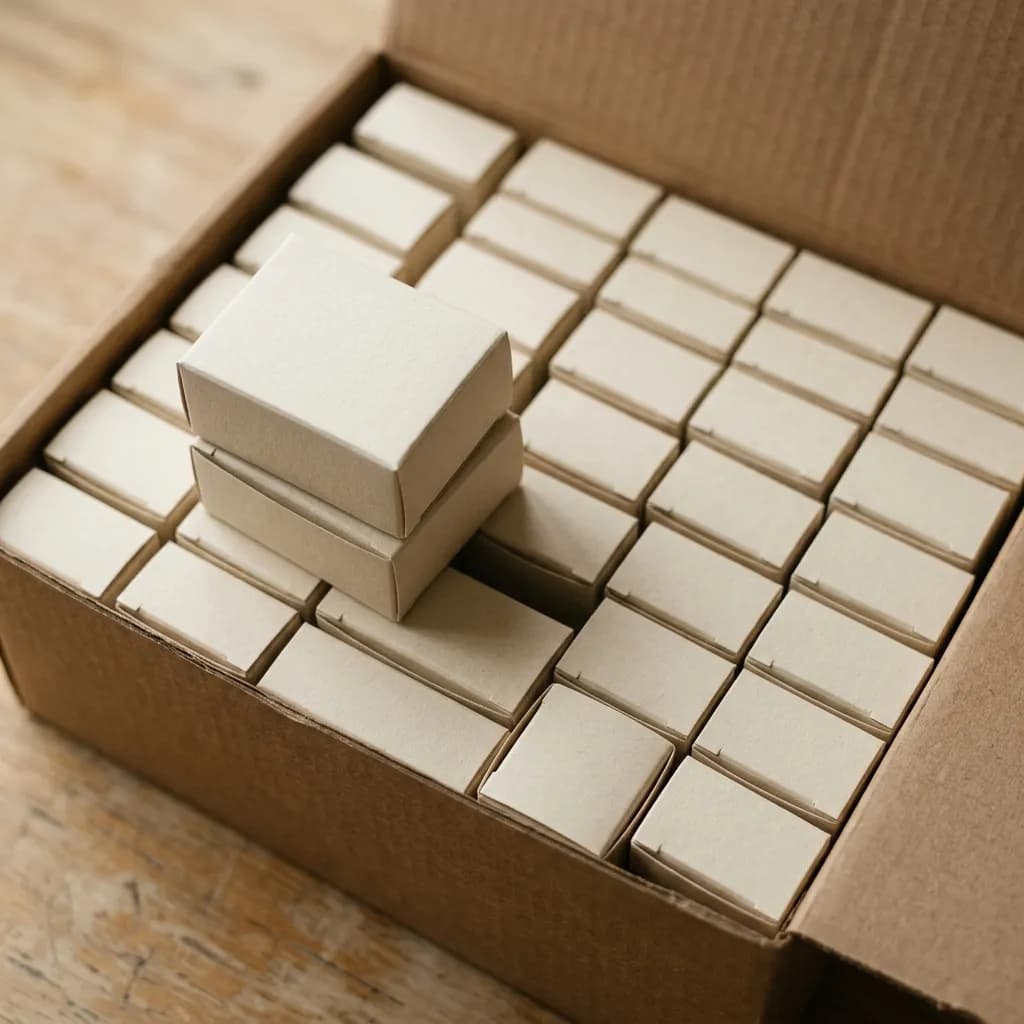
Minimum order quantities and case-pack structures are central to the wholesale buying decision in a way they never are for a single consumer purchase, and photography that shows a product in its actual case-pack or MOQ context — a flat lay of a full case, a stacked view showing how units nest or pack for shipping — helps a retail buyer quickly assess practical fit for their store's storage and display capacity. This is a category of image consumer marketplaces essentially never need but that meaningfully affects conversion on Faire, since buyers are mentally calculating storage footprint and per-unit economics as part of the purchase decision.
Lifestyle and In-Store Context Photography
Beyond clean product shots, lifestyle images showing a product styled in a retail-adjacent context (a shelf display, a styled tablescape, a product grouped with complementary items from the same brand) help retail buyers picture merchandising potential — a significant factor in the stock decision that a plain packshot doesn't address. This doesn't need to be elaborate; a simple styled flat-lay or grouped product shot communicates merchandising potential far more effectively than an isolated product-only image, and brands that invest in even one or two well-composed lifestyle images per product line tend to see stronger retailer engagement than brands running product-only catalogs exclusively.
Brand Consistency Across a Full Product Line
Retail buyers on Faire frequently evaluate a brand's entire catalog at once when deciding whether to place an initial order, and visual inconsistency across a product line — some items photographed cleanly, others with mismatched lighting or background treatment — reads as a smaller or less established operation, which can affect a buyer's confidence in placing a larger order. Consistent lighting, background, and styling across an entire catalog signals production maturity in a way that matters specifically to a B2B buyer assessing whether a brand can reliably fulfill wholesale orders at scale, not just produce one good photo.
Seasonal Collections and Pre-Order Photography
Faire's wholesale buying calendar runs on seasonal ordering cycles well ahead of consumer retail seasons — buyers place spring orders in fall, holiday orders in summer — which means brands frequently need product photography ready before physical inventory exists in final form. This creates a specific challenge: shooting samples or prototypes that need to represent the final production run accurately enough that a retail buyer's order isn't based on a materially different product than what eventually ships. When working from pre-production samples, flag this explicitly to any photo editor so retouching doesn't inadvertently "fix" a sample detail that differs intentionally from the final product spec, and revisit the photography once final production samples are available rather than treating pre-order images as permanent.
Wholesale Pricing Context and Photography's Role in Justifying Price Points
Retail buyers on Faire are constantly comparing wholesale price points against perceived product quality and retail sell-through potential, and photography plays a direct role in that value calculation. A product priced at a premium wholesale tier needs photography that visually justifies the price — refined styling, evident material quality, professional production values — since a buyer who can't see the premium in the photos is less likely to take the pricing risk on unfamiliar inventory. Conversely, over-produced, heavily styled photography on a lower-price-point product can create a mismatch that makes buyers suspicious of hidden costs or unrealistic margins. Matching photography investment and style to the product's actual price positioning helps retail buyers make faster, more confident ordering decisions.
Common Faire Photography Mistakes
- Only showing consumer-style product shots without any packaging, case-pack, or merchandising context that a retail buyer specifically needs.
- Inconsistent photography quality across a product line, which undermines a retail buyer's confidence in overall brand production maturity.
- Ambiguous unit-of-sale photography that doesn't make clear exactly what ships per ordered unit.
- Color inaccuracy that creates a bigger problem than on consumer platforms, since retail buyers often can't easily return a bulk wholesale order the way a single consumer can.
- Skipping lifestyle or merchandising-context images entirely, missing a meaningful conversion lever specific to B2B buying psychology.
A Recommended Image Set for Each Product
Retail buyers scan quickly, so the order of images matters as much as their quality. A set that answers a buyer's questions in sequence looks like this:
- Main image: the product alone on a clean white or neutral background.
- Alternate angle: the side, back or open view that shows how the product works or is built.
- Unit of sale: exactly what ships per ordered unit, including retail-ready packaging.
- Case pack: the full case or minimum order, so buyers can judge storage and shelf space.
- Scale: the product in a hand or next to a familiar object.
- Material detail: a close-up that shows quality, such as stitching, glaze, grain or finish.
- Merchandising shot: the product grouped with others from the line, styled as it might appear on a shelf.
Keeping the same order for every product makes your whole catalogue faster to browse, which buyers comparing many brands appreciate.
Give Retailers Images They Can Use
Once a store stocks your product, it needs images for its own website, newsletters and social media. Many independent retailers have no time to photograph what they buy, so brands that supply ready-to-use images make it easier for their products to sell through, and products that sell through get reordered. Supplying the images yourself also keeps your products looking consistent in every store that carries them.
A simple retailer image pack includes:
- Clean white-background images, sized for the web
- Two or three lifestyle images per product line
- File names that match your SKUs, so retailers can find the right image quickly
- A short note confirming that stockists may use the images to sell your products
Share the pack as a download link in your order confirmation or brand profile. It costs little once your photography is done, and it is a practical reason for a buyer to choose your brand over a similar one.
A Checklist for Faire Wholesale Photography
- Confirm main image meets Faire's background and resolution standards.
- Photograph the exact unit of sale including retail-ready packaging.
- Include at least one case-pack or MOQ context image for storage and shelf-planning clarity.
- Add merchandising or lifestyle-context images beyond clean product-only shots.
- Maintain consistent lighting and styling across the full product line, not just individual hero SKUs.
Our e-commerce photo editing service handles the consistency and merchandising-context photography wholesale brands need for Faire. Submit a free sample batch to see how we handle your product line.