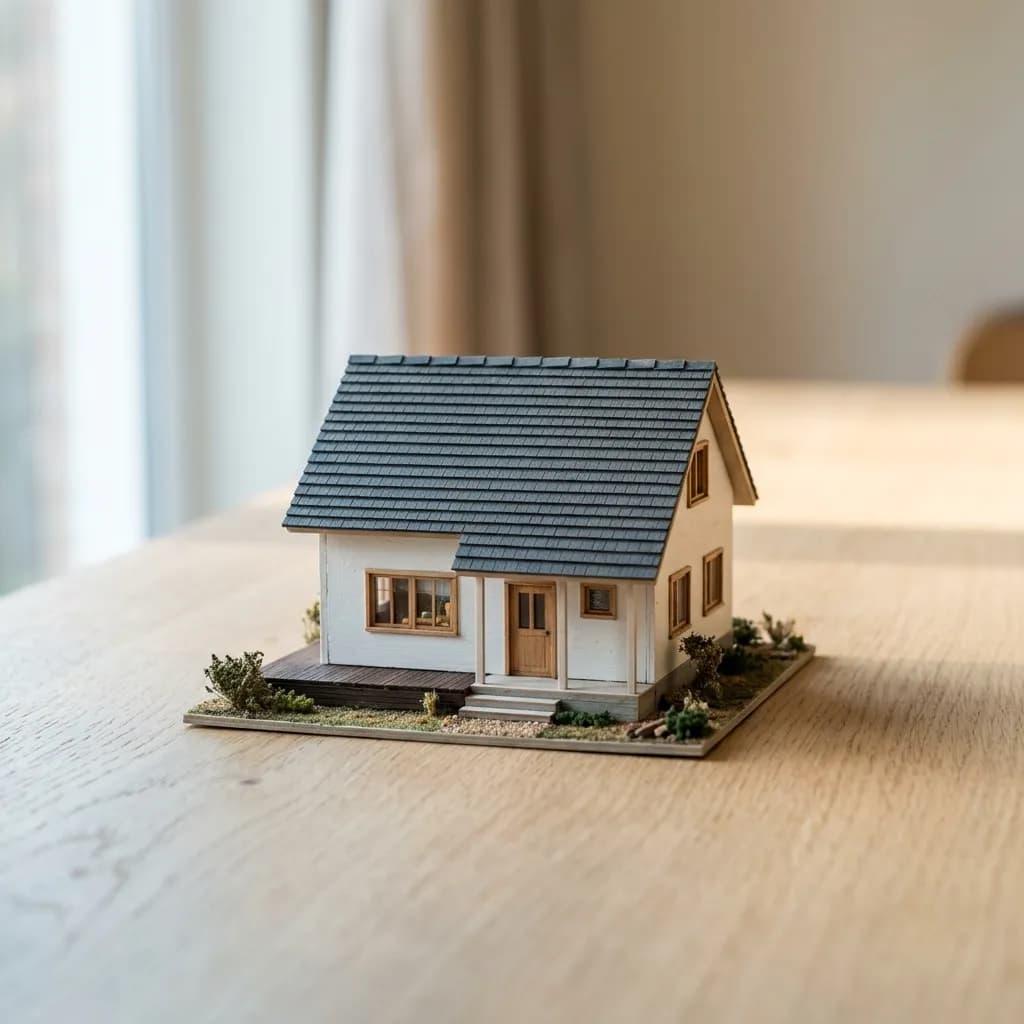
A camera can't capture a bright window and a shadowed room correctly in one shot — the dynamic range is too wide. HDR blending is how real estate photography solves that, and it's the difference between a listing photo that sells and one buyers scroll past.
Walk into most rooms and look toward a window. Your eyes adjust and you see both the room and what's outside it clearly. A camera can't do that in a single exposure — the dynamic range between a sunlit window and a shadowed interior corner is wider than any sensor can capture at once. Shoot for the window and the room goes black. Shoot for the room and the window blows out to solid white. HDR blending exists to solve exactly this problem, and it's the foundation technique behind almost every professional real estate listing photo.
What HDR Actually Means in Real Estate Photography
HDR stands for high dynamic range, and in real estate photography it refers to a specific workflow: the photographer shoots the same frame multiple times at different exposure settings — typically 3 to 5 brackets, from underexposed (to capture bright window detail) to overexposed (to capture shadowed interior detail). A retoucher then manually blends those exposures into a single image where both the room and the window view are correctly exposed simultaneously. This is different from a one-click "HDR mode" on a phone camera, which auto-blends brackets algorithmically and frequently produces the flat, over-processed, slightly surreal look that gives HDR photography a bad reputation. Professional real estate HDR is manual, exposure-by-exposure blending aimed at looking natural, not at looking obviously processed.
How the Blending Actually Works
A retoucher works through the bracketed set region by region rather than applying one global blend. The window area is pulled from the underexposed bracket so the view outside stays visible with real detail — trees, sky, neighboring buildings — instead of a blown-out white rectangle. The room's shadowed corners and ceiling are pulled from the overexposed brackets so they read as lit and inviting rather than murky. The transition between these blended regions has to be seamless: a visible halo or edge where the window meets the wall is the most common sign of poorly executed HDR work, and it's exactly what separates amateur processing from professional.
Sky Replacement
A related but distinct technique: swapping a grey, overcast, or empty sky in an exterior shot for a more appealing one — blue with soft clouds, or a warm sunset tone depending on the desired mood. This matters because exterior shots are frequently taken on whatever day the photographer was scheduled, regardless of weather, and a listing shouldn't look worse than the property because of a cloudy Tuesday. Good sky replacement matches the lighting direction and color temperature of the sky to the rest of the scene — a warm golden sky over a house lit with cool, flat midday light on the walls reads as obviously fake.
Day-to-Twilight Conversion
This is the highest-impact and most technically demanding real estate editing technique: converting a photo taken during the day into a twilight or "magic hour" version, complete with a deep blue-purple sky, warmly glowing interior windows (as if lights are on inside), and exterior landscape lighting that reads as active. It's a completely digital transformation — the photo is still taken during normal daylight hours, since twilight shoots are logistically difficult to schedule and weather-dependent, but the final image looks like it was captured at dusk. This technique is associated with significantly higher listing engagement, since twilight photography reads as premium and aspirational in a way flat daytime shots don't — it's commonly reserved for a property's hero image rather than applied across an entire listing set.
Virtual Staging
An empty room photographs poorly — buyers struggle to judge scale and imagine how furniture would fit, and an empty space photographs as cold rather than inviting. Virtual staging digitally furnishes a room with realistic furniture, rugs, and decor matched to the room's actual dimensions, lighting, and perspective. Done well, the added furniture respects the room's true proportions and the light source direction already present in the photo, so shadows and highlights on the virtual furniture match the real light in the space. This is significantly cheaper than physical staging (renting and moving real furniture) and is now standard for vacant listings, particularly for higher-end properties where an empty room undersells the space.
Object and Distraction Removal
Beyond exposure and sky, real estate editing routinely removes anything that distracts from the property itself: power lines crossing the sky, parked cars in the driveway, trash cans, a neighbor's visible fence or satellite dish, and — in interior shots — personal items like family photos, laundry, or clutter that make a room feel lived-in rather than move-in ready. This is standard practice specifically because listing photos are meant to show the property, not the seller's current life in it.
Straightening and Perspective Correction
Wide-angle lenses, standard for interior real estate photography because they capture more of a room in one frame, introduce lens distortion — vertical lines (door frames, walls, windows) can lean or bow rather than reading as perfectly vertical. Straightening corrects this distortion so architectural lines read true, which matters more than it might seem: subtly leaning walls create an unconscious sense that something is "off" about a photo even to a viewer who can't articulate why.
When You Don't Need Full HDR
Not every shot needs the full bracketed HDR treatment. A small interior space with even, diffused lighting and no bright window in frame may only need basic exposure and color correction — full HDR blending on a shot with no real dynamic range problem is unnecessary cost and turnaround time. HDR earns its place specifically when a frame includes both a bright light source (a window, a skylight, an open door to daylight) and a shadowed interior area in the same shot.
Common Mistakes That Make HDR Look Fake
- Over-blending into the "HDR look": flat, low-contrast, slightly glowing images with halos around windows — the signature of automated HDR tools rather than careful manual blending.
- Unrealistic color saturation: pushing greens and blues to make grass and sky pop beyond what looks natural, which reads as cheap rather than premium.
- Virtual staging furniture at the wrong scale or perspective: furniture that doesn't match the room's actual proportions or light direction is one of the fastest ways to break the illusion and undermine buyer trust in the listing photos overall.
- Twilight conversion applied to every image in a set: the technique loses its impact — and starts to look suspicious to buyers — if every single photo in a listing is a twilight shot rather than one hero image.
How to Brief a Real Estate Photo Editing Job
- Bracket count and format: confirm how many exposures were shot per frame (3, 5, or more) and in what file format (RAW is standard for proper HDR blending).
- Which images need which treatment: not every frame needs sky replacement or twilight conversion — specify which shots are the hero images that warrant the heavier treatment.
- Staging style reference: if requesting virtual staging, provide a style direction (modern, traditional, minimalist) that matches your target buyer and the property's actual character.
- MLS or platform specs: confirm resolution, aspect ratio, and file size limits for your destination — MLS systems and listing platforms often have specific technical requirements that differ from general web use.
Shooting Brackets That Blend Cleanly
Clean HDR starts at the shoot. A few habits make blending faster and the results more natural:
- Use a tripod and do not touch the camera between brackets. Even a small shift creates ghost edges that take time to fix.
- Lock the white balance. Auto white balance can change between exposures, which makes the blended colours uneven.
- Keep the room still. Switch off ceiling fans, close doors that might swing, and wait for curtains to settle.
- Decide on the lights and keep it consistent. Either switch on every light in the room or none of them, and do the same in every room for a uniform set.
- Shoot from a consistent height, usually around chest height, so rooms feel natural and the vertical lines are easier to correct.
Disclosure and Honesty in Listing Photos
Buyers and agents expect listing photos to be improved, but not misleading. Most listing services and local rules draw the line in a similar place:
- Label virtually staged photos. A simple "virtually staged" caption, and ideally an unstaged version of the same room in the gallery, avoids disappointment at the viewing.
- Temporary items can go. Cars, bins, toys and personal belongings are fine to remove.
- Permanent features should stay. Altering or removing things that come with the property, such as cracks, damp patches, a neighbouring building or a busy road, can count as misrepresentation. Some listing services also treat power lines as permanent, so check your local rules before removing them.
- Keep the colours believable. A lawn that is greener in the photo than in reality is the first thing buyers notice when they arrive.
A Quick Quality Checklist Before You Approve a Batch
- Check window-to-wall transitions at full zoom: look for visible halos or edges where the blended exposure regions meet.
- Confirm vertical lines actually read as vertical: door frames and wall corners should be straight, not subtly leaning.
- Check virtual staging furniture scale against door and window heights: furniture that looks slightly too large or small relative to fixed reference points in the room is an easy tell.
- Confirm twilight conversion was applied only to the intended hero shots, not accidentally spread across the full set.
Our real estate photo editing service covers HDR blending, sky replacement, day-to-twilight conversion, and virtual staging, delivered in 24 hours. Submit 5 images for a free trial to see the blend quality on your own listing before committing a full shoot.